Skip to content
gowith.solar

See how solar surplus heats a water cylinder

Connect water volume, temperature rise and electrical energy. The cutaway explains the parts; the calculation treats the entered volume as uniformly heated.

Your situation

Start from an example cylinderExample figures
Water to heat

Treats the water as one volume. A real immersion may heat only part of it.

Spare solar power

A typical immersion element is limited to its own rating.

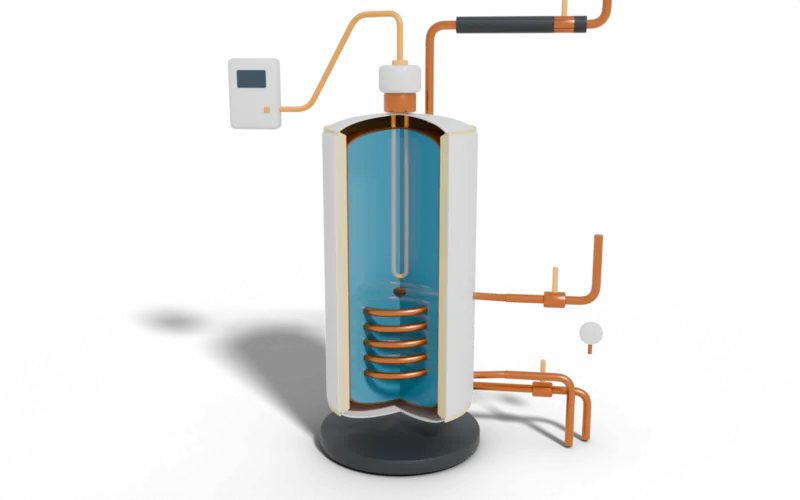
What the cutaway shows
Hide it to see the coil and immersion element.
More assumptionsheating efficiency
Cold inletHot outlet150 litres20°C → 55°CImmersion elementInsulation
Schematic cutaway. The calculation assumes the entered water volume heats uniformly; real cylinders have temperature layers and heat losses.

Colours explain the parts and a warming tint, not temperature layers in the water.

Calculated from your figures

Around 3.06 hours at this steady surplus

Temperature rise
35°C
Heat stored in the water
6.11 kWh
Electrical energy required
6.11 kWh

What this means

This uniform-water estimate connects temperature rise and stored heat. Real cylinders heat in layers, lose heat and use controls that this illustration does not simulate.

How this was calculated

Based on the figures you entered.

  • Stored heat uses 1 kg per litre and 4.19 kJ per kg per degree C.
  • The volume is uniformly heated; stratification, draw-off, pipework and cylinder heat losses are excluded.
  • Surplus power is constant electrical power reaching the heater after applicable power limits.
  • The selected temperature is a calculation input, not a thermostat recommendation.

Method hot-water-cylinder-v1

The working

The maths, step by step

stored heat (kWh)=150×(55−20)×4.19÷3600≈6.110417\text{stored heat (kWh)} = 150 \times (55 - 20) \times 4.19 \div 3600 \approx 6.110417
electricity (kWh)=6.110417÷(100/100)≈6.110417\text{electricity (kWh)} = 6.110417 \div (100 / 100) \approx 6.110417
time (hours)=6.110417÷2≈3.055208\text{time (hours)} = 6.110417 \div 2 \approx 3.055208

The water is treated as a uniform volume, using approximately 1 kg per litre and 4.19 kJ per kg per °C. Heat losses and changing surplus are excluded.

Understand your result

A closer look at the calculation

The context behind the numbers, so you can decide what to check next.

Heat stored in the water

Enter the volume of water, its starting temperature and a target temperature. The illustration treats that volume as uniformly heated and uses approximate constant properties for water.

A real cylinder can have temperature layers and an immersion element may heat only part of the volume. The cutaway is an illustration, not a simulation of those layers.

Electricity and time

The calculation converts the stored heat into electrical energy using the entered efficiency. It then divides that electricity by the steady surplus power reaching the heater.

The power must already reflect the relevant immersion element and diverter limits. Actual solar surplus varies throughout the day, so a constant-power time is not a schedule or guarantee.

What to check separately

Draw-off, pipework and cylinder heat losses are excluded, as are other uses of the surplus. Those effects can change the energy and time needed in practice.

The temperature is a calculation input, not advice on thermostat settings or water safety. Follow the equipment instructions and seek qualified advice about safe operation.

Take it further

Solar and battery ROI calculator

See what the whole system saves.

The ROI calculator joins generation, what you use at home, export income and a battery into one payback figure, in today's prices.

Open the ROI calculator

Before you rely on this

Connect water volume, temperature rise and electrical energy. The cutaway explains the parts; the calculation treats the entered volume as uniformly heated.

  • This is a sensible-heat illustration, without standing losses or stratification.
  • Temperature controls and hygiene requirements depend on the installed system; the example is not an instruction to change its settings.

Reference sources

Calculated results show their method version, assumptions and any data sources under "How this was calculated". Example starting figures are illustrations, not measurements.

Common questions

How much solar surplus does it take to heat a hot water cylinder?

The tool turns your water volume and temperature rise into the heat stored in kilowatt-hours, then into the electricity needed after heating efficiency. Dividing by your steady spare solar power gives the hours required. The defaults are 150 litres heated from 20 to 55 degrees with 2 kW spare.

How long will spare solar take to heat my water cylinder?

Time is the electrical energy needed divided by the steady spare power you enter. If the power is zero there is no finite time, and the tool says so. Real sunshine varies through the day, so treat it as a guide rather than a timetable.

Does the hot water cylinder tool include heat losses?

No. It treats the whole entered volume as uniformly heated and ignores stratification, hot water draw-off, pipework and cylinder heat loss. It is a sensible-heat illustration using 1 kg per litre and 4.19 kJ per kg per degree of water.

What spare power should I enter for a solar immersion heater?

Enter the steady power that actually reaches the heater. An immersion element is limited to its own rating, so a diverter cannot send more than that, even if you have more surplus. The form notes this limit beside the field.

Should I use this tool to set my cylinder thermostat?

No. The target temperature is only a calculation input. Thermostat settings and hygiene requirements depend on your installed system, and the tool does not choose or recommend them.