Buying and installing
How to read a solar quote, check an installer, handle planning rules, and get panels on a roof without overpaying.
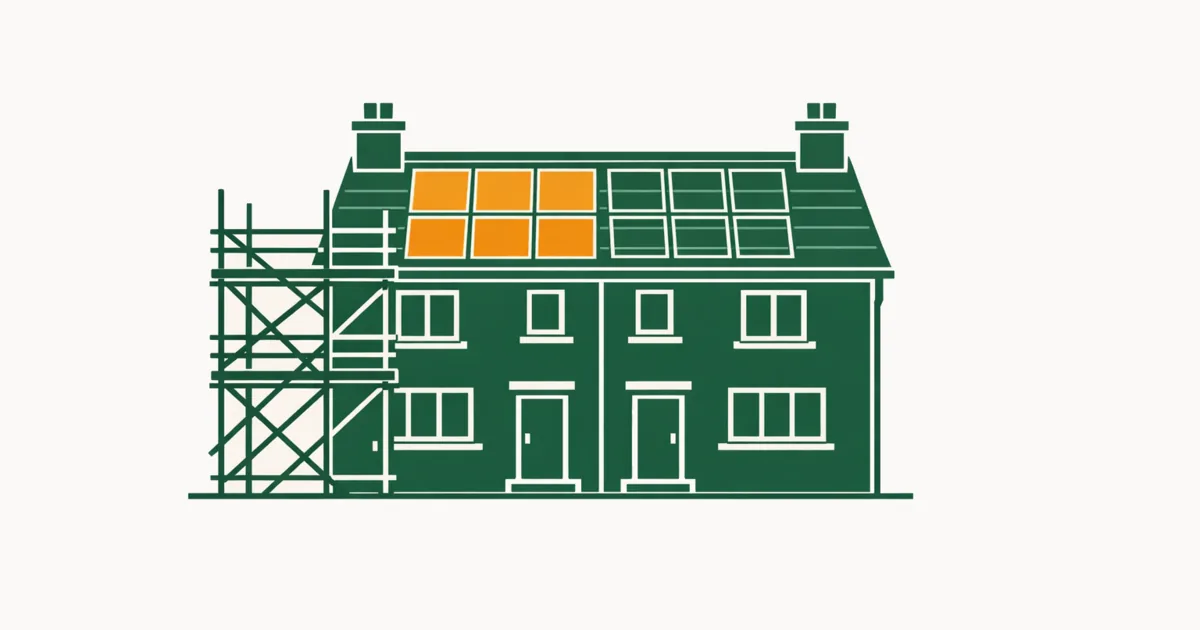
Getting solar installed is mostly a purchasing problem rather than a technical one. The equipment is mature and the physics is settled. What varies is the quality of the survey, the honesty of the generation estimate, and how much margin sits in the price.
This hub is about the buying process: what to ask, what to check, and which parts of the paperwork actually matter.
Get three quotes, and make them comparable
Quotes are rarely formatted the same way, which makes side by side comparison harder than it should be. Before comparing, normalise them:
- System size in kWp. Panel count multiplied by panel wattage, divided by a thousand.
- Price per kWp, including VAT. The total divided by the size.
- Estimated annual generation in kilowatt hours, and the tool used to produce it.
- Inverter type and rating, and whether it is battery ready.
- What is excluded. Scaffolding, electrical upgrades, roof repairs, bird protection.
Once those five are written down for each quote, the differences become visible, and most of them turn out to be specification differences rather than price differences.
Check the generation estimate, not just the price
The savings figure in a quote is downstream of the generation estimate, so an optimistic generation figure quietly inflates everything that follows.
Reasonable questions to ask:
- Which modelling tool produced this, and what shading factor was applied?
- Was the roof pitch and orientation measured or assumed?
- Does this figure account for the inverter’s conversion losses?
- What degradation rate is assumed over the period quoted?
An installer who has surveyed properly will answer these easily. One who cannot is quoting from a template.
Certification, and what it actually buys you
MCS registration is the scheme most domestic installations are certified under. It is worth understanding what it does and does not mean.
What it does: it establishes that the installation meets a defined standard and was carried out by a certified business, and it is normally what electricity suppliers require before they will pay you for exported electricity. Without it, the export side of the business case can disappear.
What it does not: it is not a guarantee of workmanship quality on your specific job, and it is not a warranty. It is a scheme membership and a compliance process.
Check the certification independently rather than accepting a logo on a document. Certification bodies publish searchable registers.
Planning permission is usually not needed, but check the exceptions
For most houses, roof mounted panels fall under permitted development, which means no application is required. The exceptions are the ones that catch people out:
- Listed buildings, where consent is generally required.
- Conservation areas, where restrictions commonly apply to roofs facing a highway.
- Flat roofs, where the mounting frame raises the panels above the roof plane and the tolerance is tighter.
- Ground mounted arrays, which have their own size limits.
Permitted development is a set of conditions, not a blanket exemption. If your property is unusual, confirm before ordering equipment.
The network operator application
Your installer applies to the local network operator either for permission to connect, or to notify a connection after the fact, depending on system size. This is routine, but it can impose a limit on how much you are allowed to export, and occasionally on the size you can install.
Ask whether an export limit is expected on your connection. A system that is capped at export will behave differently from the one in the quote’s savings figure.
Sequence the work sensibly
Two practical points that save money:
Do the roof first. If the roof will need work within a few years, do it before the panels go on. Removing and refitting an array to replace tiles underneath is an avoidable cost.
Specify for the battery you might add later, even if you are not buying one now. A hybrid inverter costs more up front than a plain one but avoids replacing the inverter when storage is added. Whether that is worth it depends on how likely the battery is.
Judge the quote against your own model
The most useful thing you can bring to a sales conversation is your own estimate of what the system will save, built from your own usage and your own tariff. Once you have that, a quote’s savings figure stops being a claim you have to accept and becomes a number you can interrogate.
Everything in buying and installing
The first articles in this topic are on the way.