Skip to content
gowith.solar

See where your solar power goes

Turn appliances on, change the sunshine and switch the grid off. Follow each connection to understand imports, exports and battery limits.

Your situation

Try a moment in the dayExample figures
Right now
Needs compatible hardware, wiring and commissioning.
More assumptionsusable battery capacity, reserve kept back, charge power limit, discharge power limit
Calculating your scenario…

Understand your result

A closer look at the calculation

The context behind the numbers, so you can decide what to check next.

Power flows at one moment

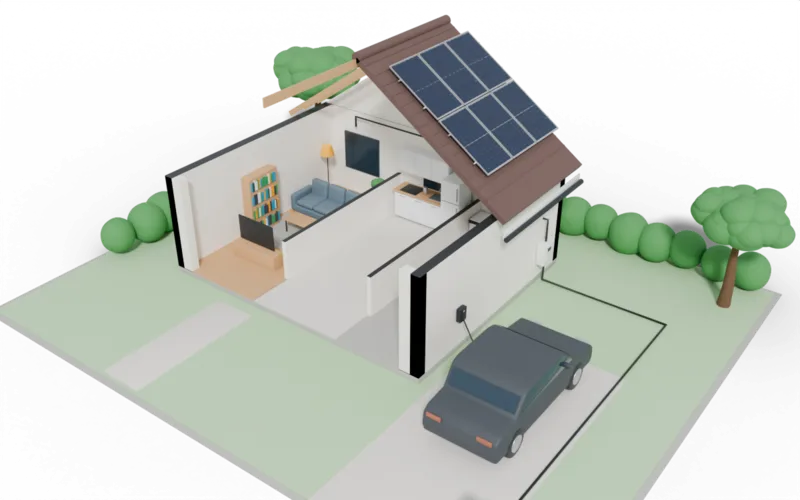
The diagram compares generation with the appliances and other loads you select. Power is measured in kW: it is a rate at a moment, whereas energy in kWh accumulates over time.

When generation exceeds the home load, the illustration can show surplus flowing to a battery or the grid within the entered limits. When generation is lower, the battery or grid can supply the shortfall under the scenario's rules.

Battery limits matter

A battery has both stored energy and power limits. Having energy available does not by itself mean it can deliver any amount of power at once.

The picture is a simplified snapshot, not a simulation of a whole day or a forecast of bills. Real equipment has control settings, losses and operating limits that vary.

During a power cut

Switching off the grid in the scene illustrates an outage scenario. Backup power requires compatible equipment, an appropriate installation and circuits designed to operate during the outage.

Do not assume a grid-connected solar system will power the whole home during a cut. Check supported circuits, continuous and surge ratings, and the installer's documentation.

Take it further

Solar and battery ROI calculator

See what the whole system saves.

The ROI calculator joins generation, what you use at home, export income and a battery into one payback figure, in today's prices.

Open the ROI calculator

Before you rely on this

Turn appliances on, change the sunshine and switch the grid off. Follow each connection to understand imports, exports and battery limits.

  • This is a snapshot of power in kW, not a forecast of annual energy or savings.
  • Power during an outage requires compatible backup equipment and the right circuits.

Reference sources

Calculated results show their method version, assumptions and any data sources under "How this was calculated". Example starting figures are illustrations, not measurements.

Common questions

Where does my solar power go when it is sunny and I am home?

The tool follows the house's demand first: solar feeds whatever the home is using, then any surplus charges the battery up to its charge limit, and what is left is exported to the grid. You set the solar output, the household demand and the battery charge, and the arrows show each flow in kW. It is a snapshot of one moment, not a day's total.

What happens to my solar panels and battery in a power cut?

If you switch the grid off and have no backup equipment fitted, the tool shows the solar and battery disconnected from the house, so nothing is supplied. With backup switched on, they can keep supplying the house up to the battery's discharge limit. That setting assumes compatible hardware, wiring and commissioning, which the tool cannot check for you.

Why does my house still use the grid when I have a battery?

A battery has two limits: how much energy it holds and how fast it can discharge. If the home is asking for more power than the discharge limit, or the charge has fallen to the reserve you keep back, the grid covers the rest. You can change the capacity, reserve and limits in the advanced settings to see this happen.

What does exporting solar to the grid mean?

Export is surplus solar that the home and battery cannot use at that moment, so it flows out to the grid. The tool shows it as solar to grid in kW. It does not model any export limit on your connection, and it does not put a price on the exported power.

Does this tool show how much I will save in a year?

No. It is an explanatory snapshot of power at one instant, using AC-side power balances with conversion losses left out. For savings, use the calculators on the site that work over a full year.