Octopus Cosy: a tariff shaped around heating
Three cheap windows a day, aimed at heat pumps. Whether it suits a house without one.
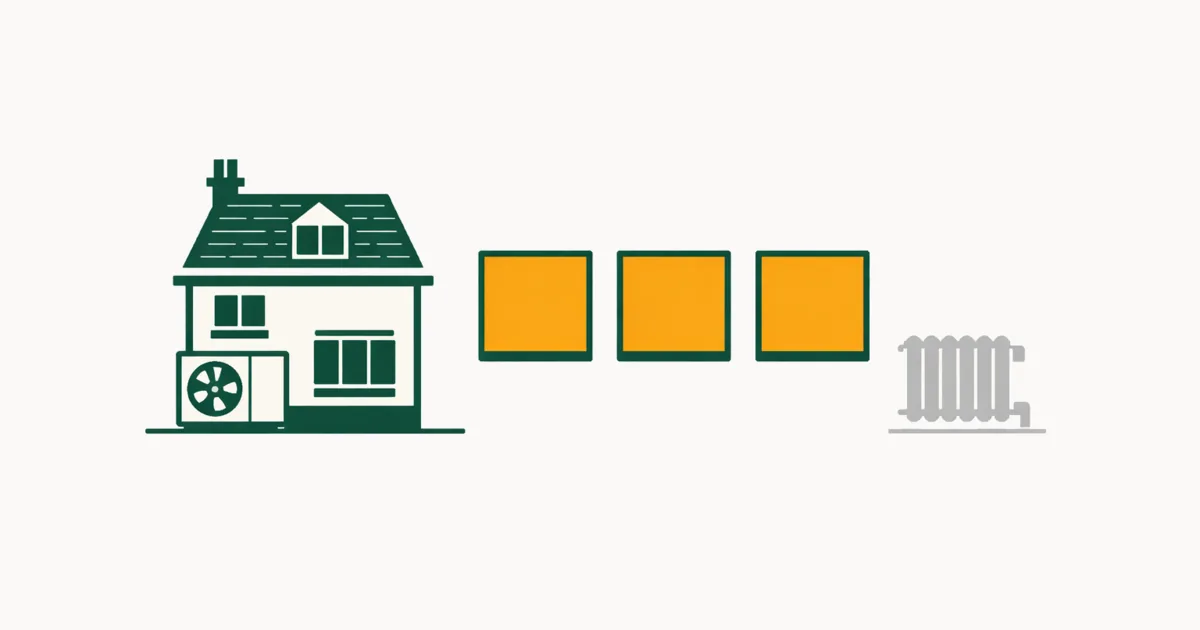
Cosy divides the day into cheap windows and expensive ones, with the cheap periods placed to suit a heating system running in bursts rather than continuously. It was designed around heat pumps, and its eligibility rules say so: you need electric heating of some kind to join at all.
Whether it suits your particular electric-heated house depends entirely on how much consumption you can move into those windows, and the windows are published, so the answer is arithmetic rather than opinion.
The shape, from the tariff’s own page
Per the published tariff description, checked on 19 October 2026, Cosy runs three cheap periods every day, 04:00 to 07:00, 13:00 to 16:00 and 22:00 to midnight, priced 51% below your region’s day rate, and a peak from 16:00 to 19:00 priced 50% above it, with the day rate in between. The page gives the percentages and the windows, not pence: the rates are regional.
Eligibility is explicit: a heat pump, air or ground source, an electric boiler, or electric radiators at the property, plus a compatible smart meter. A gas-heated house with a battery cannot join this one, whatever the battery might have made of those windows; its options are the battery-and-solar tariff or the EV tariff.
The middle-of-the-day window is what distinguishes Cosy from a conventional overnight tariff, and it is the feature that makes it interesting for households whose heating can be scheduled.
- Cosy Octopus: Cosy periods 04:00 to 07:00, 13:00 to 16:00 and 22:00 to 00:00 at 51% below the regional day rate; peak 16:00 to 19:00 at 50% above it. Needs a heat pump, electric boiler or electric radiators.
- Windows are in UK local time as the tariff page states them. Rates on Flux and Cosy are regional and the pages give none; Agile is a different price every half hour.
- A time of use tariff rewards a household that moves load into the cheap hours and penalises one that does not: the strip is the timetable, not a saving.
- Octopus Energy, Intelligent Octopus Go (as advertised on the tariff page, checked 2026-10-20)
- Octopus Energy, Octopus Flux (as published on the tariff page, checked 2026-10-19)
- Octopus Energy, Cosy Octopus (as published on the tariff page, checked 2026-10-19)
- Octopus Energy, Agile Octopus (as published on the tariff page, checked 2026-10-19)
Illustrative arithmetic on the inputs shown. For a projection with degradation, replacement and your tariff, use the calculator.
The terms on one table
| Item | What the page states | Checked |
|---|---|---|
| Cheap windows | 04:00 to 07:00, 13:00 to 16:00, 22:00 to 00:00, every day: eight hours | 2026-10-19 |
| Cheap rate | 51% below the day rate in your region | 2026-10-19 |
| Peak window | 16:00 to 19:00, every day: three hours | 2026-10-19 |
| Peak rate | 50% above the day rate in your region | 2026-10-19 |
| Day rate | The remaining thirteen hours; regional, no pence on the page | 2026-10-19 |
| Eligibility | A heat pump, electric boiler or electric radiators, plus a compatible smart meter; the equipment need not have been installed by Octopus | 2026-10-19 |
Source for every row: the Cosy page.
Put the percentages together and the peak is about three times the cheap rate: 150% of the day rate against 49% of it. That ratio, rather than any pence figure, is what decides the tariff, because a unit moved from the peak to a cheap window saves about two thirds of its peak cost whatever the regional day rate is.
Who it was built for
A heat pump running a well-insulated house does not need to run constantly. It can heat the fabric and the hot water during cheap periods and coast through expensive ones, particularly if the house holds heat reasonably well.
That is what the tariff is arranged around: heat when it is cheap, coast when it is not. The 04:00 window warms the house before breakfast, the 13:00 window tops up the fabric and cylinder before the peak, and the 22:00 window covers the late evening. A heat pump with a decent controller can be scheduled against those three dips and skate over the 16:00 to 19:00 peak on stored warmth.
The three electric-heated cases
Heat pump: the designed fit. The tariff’s whole shape mirrors a heat pump’s ability to time-shift heat into a building’s fabric and cylinder.
Storage heaters or an electric boiler with a cylinder: often good. The same logic, cruder hardware. Storage heaters charging in the 04:00 and 13:00 windows instead of a single overnight window is a genuine improvement over the old two-rate arrangements for many homes.
Electric radiators with no storage: the risky case. Radiators heat when the room needs it, and the room tends to need it between 16:00 and 19:00, exactly the 50% premium window. Without fabric that holds heat or a battery, the peak can eat the savings from the dips. This household should do the half-hourly check below before switching, not after.
With a battery alongside the electric heating: strong. Multiple cheap windows give more opportunities to charge, including the daytime one. In winter, when there is little surplus generation to store, a 13:00 cheap window lets the battery refill before the evening peak without waiting for the small hours, which single-window tariffs cannot offer.
With solar and no battery: usually a poor fit. Your generation peaks during the middle of the day, which is when the tariff is already cheap. You are generating during a cheap window and importing during an expensive one, which is the wrong way round, and the value of your self-consumption falls because the import you avoid is discounted import.
The evening peak is the risk
The cheap windows are paid for by the 16:00 to 19:00 peak at 50% above day rate, and that is when most households consume most.
If you cannot move consumption out of it, or cover it from a battery or from heat banked in the fabric, you will pay peak rates for the largest part of your day’s usage. That is the failure mode, and it is the same one as with any actively-shaped time-of-use tariff: the tariff rewards a system run against it and penalises a household that switched and changed nothing.
What the quote will say
Cosy Octopus: cheap electricity for eight hours a day, perfect for heat pumps.
Eight hours is right, and so is the heat pump. What the sentence leaves out is the three hour peak at half as much again as the day rate, which is the price of the eight cheap hours and lands on the busiest part of the evening. The question to ask is how much of your heating and hot water can be scheduled into the windows and how much of your 16:00 to 19:00 load can be covered from banked heat or a battery; the half-hourly check below answers it in pounds for your postcode’s rates.
The check to run
- Get your half-hourly consumption for a representative month.
- Map each half hour to the published windows above.
- Total the cost at the tariff’s rates for your region.
- Compare against the same consumption at your current flat rate.
- Then repeat, assuming you shift what genuinely can be shifted: heating schedules, hot water, dishwasher, car.
Steps three and four give you the answer for the household as it is. Step five gives you the answer for the household you would have to become, and the gap between them is the effort the tariff is asking of you, in pounds.
Against the alternatives from the same supplier
Roughly:
- Heat pump, or scheduled electric heating: this one.
- Battery and solar: compare against the symmetrical import-export tariff, which prices export as well as import.
- Electric car: the EV tariff’s 8p window will almost certainly beat it on the car. On 19 and 20 October 2026 this page briefly gave 7.6p, from a footnote on Octopus’s page; the advertised rate is 8p. The whole-house question is the four-line calculation from the tariff guide.
- Nothing shiftable: none of them, and a flat rate is better.
Questions people ask
Can I join Cosy without a heat pump?
With an electric boiler or electric radiators, yes, per the eligibility on the page; with gas heating, no, whatever else is in the house. A gas-heated home with a battery is pointed at Flux (which also needs solar) or the EV tariff, and a gas-heated home with neither has no time of use shape from this supplier built for it.
Is the 13:00 window worth anything if nobody is home?
That is the window built for hardware rather than people: a heat pump topping up a cylinder and the fabric, storage heaters charging, a battery refilling before the peak. If the house has none of those and nobody in, the window passes unused and the tariff is being judged on the 04:00 and 22:00 windows alone, which is a conventional overnight tariff with a worse peak.
How does Cosy compare with Intelligent Octopus Go for a heat pump?
The EV tariff has one six hour window overnight at an advertised 8p; Cosy has eight cheap hours in three windows at a regional rate, with a peak the EV tariff does not have. A heat pump that can bank heat in the afternoon window uses Cosy’s shape; one that runs all evening regardless pays the peak. Without the regional pence the comparison cannot be finished here, which is why the check above uses your quote’s rates.
Does solar help on Cosy?
Less than on a flat tariff, because the midday generation displaces import that was already in a cheap window. It helps most with a battery that can hold the midday output for the 16:00 to 19:00 peak; without one, a solar household on Cosy is generating when electricity is cheap and importing when it is dear, which is the shape to avoid.
Check your own numbers
Rates and window times change. Check the current terms on the supplier’s own pages, then model your own consumption against them rather than relying on any summary, including this one. The calculator does not model Cosy’s three windows, so the half-hourly check above is the honest tool for the tariff; what the calculator shows is whether a battery pays on its everyday job at fixed rates. Start from a 4kW array with a 10 kWh battery and electric heating’s higher usage: open the calculator with the worked example loaded.
Heating is the biggest electrical load an electrified house has, which is why the right tariff choice here is worth more than almost any hardware tweak, and why the wrong one costs accordingly.
The other time-of-use and export tariffs are covered in solar tariffs and export payments explained.
Sources
- Octopus Energy, Cosy Octopus: the three cheap windows at 51% below the regional day rate, the 16:00 to 19:00 peak at 50% above it, and the eligibility list; no unit rates on the page. Checked 2026-10-19, octopus.energy.
- Octopus Energy, Intelligent Octopus Go: off-peak rate of 8p between 23:30 and 05:30, as advertised. Checked 2026-10-20, octopus.energy.
- The quote box is an illustration of how the tariff is sold, not a real quote.
Related
- Octopus Flux explained: who it actually suitsA tariff built around a battery. What the three periods do and the setup that makes it pay.
- Intelligent Octopus Go: the EV tariff that schedules your carA cheap overnight window plus supplier-controlled charging. What you give up for the rate.
- Octopus solar tariffs: Outgoing Octopus and the alternatives, in numbersHow the outgoing, tracking and time of use options differ, and which generation and consumption patterns each one actually suits.